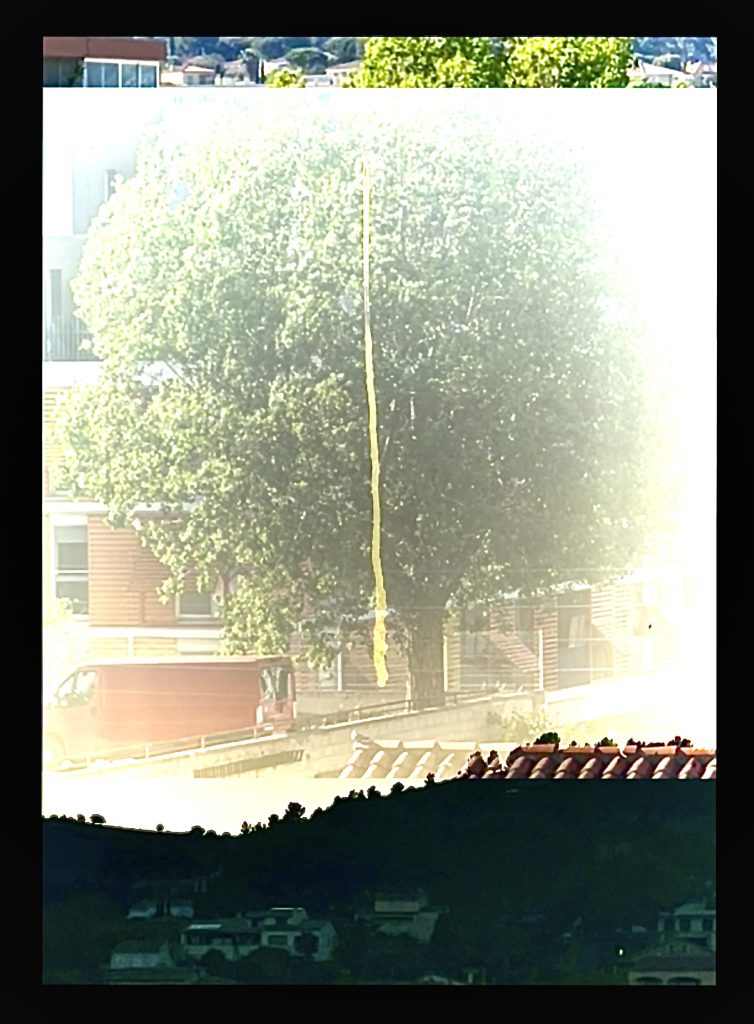
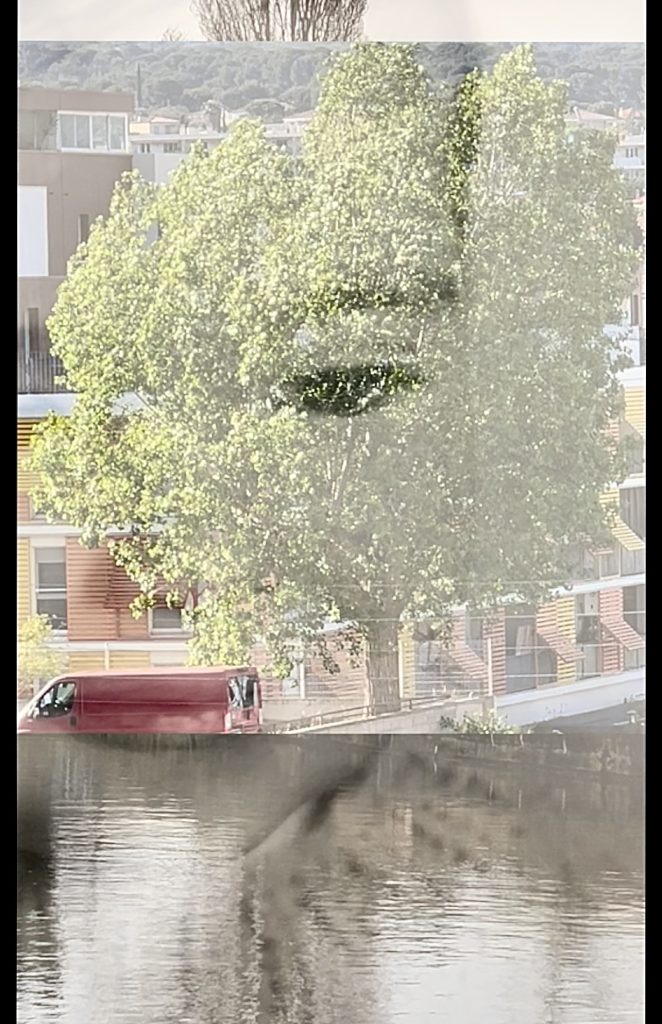
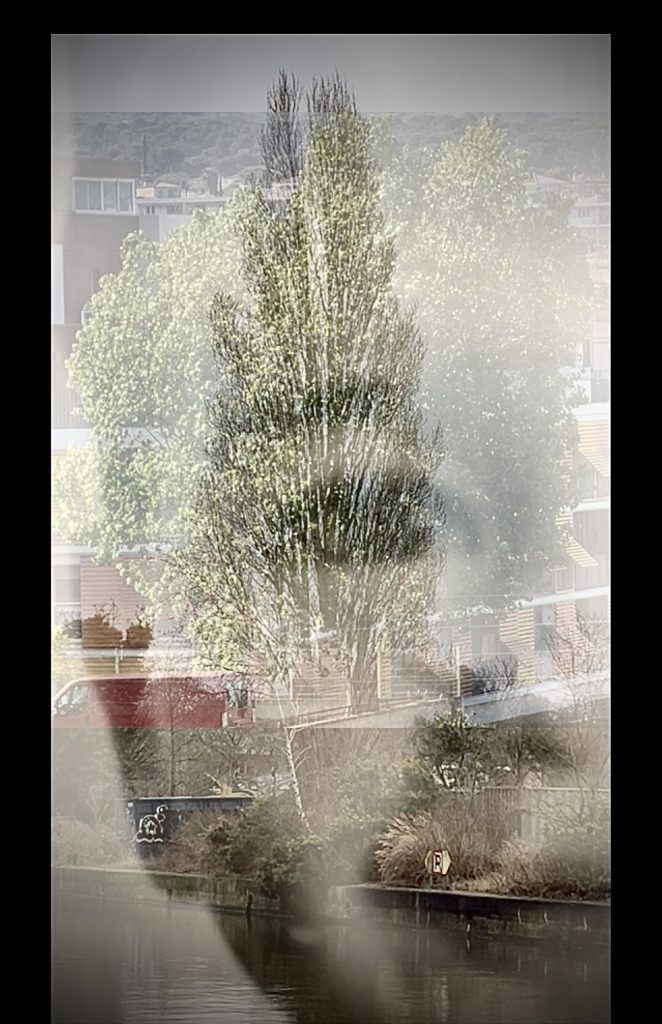
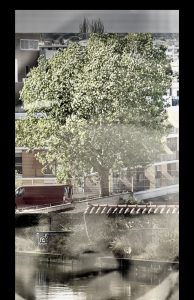
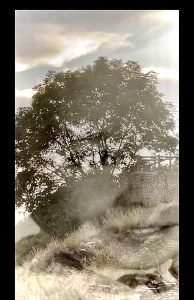
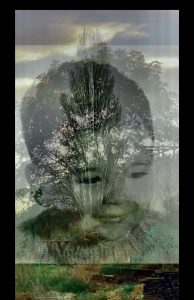
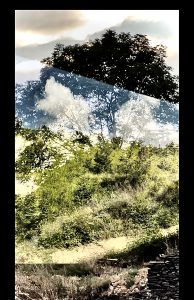
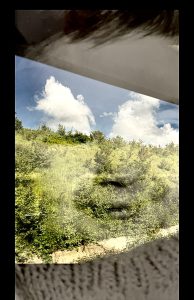
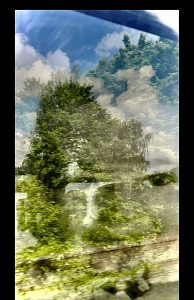
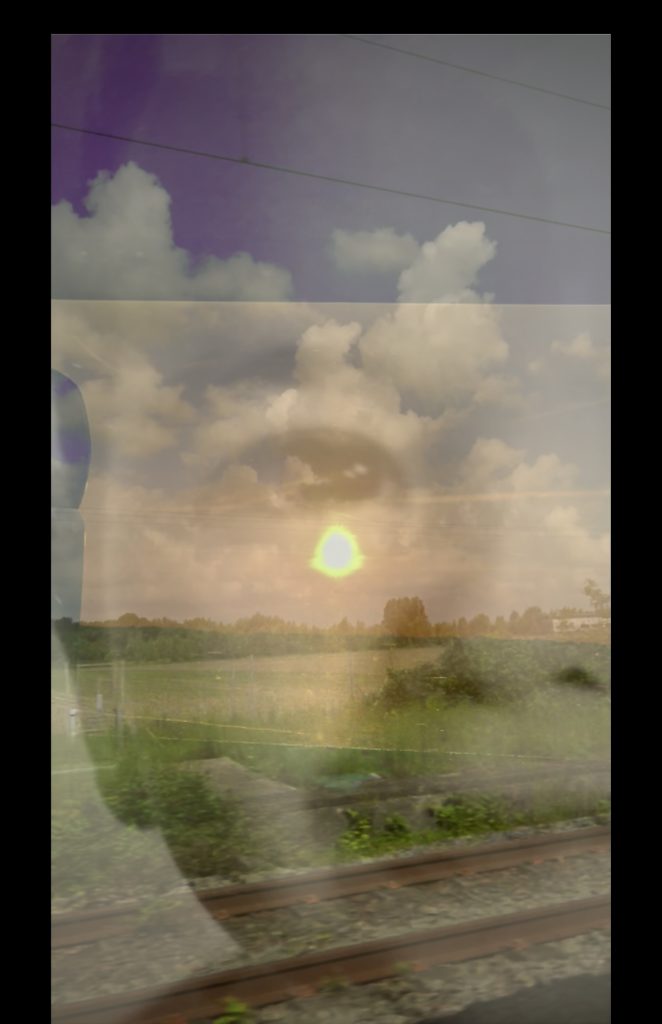
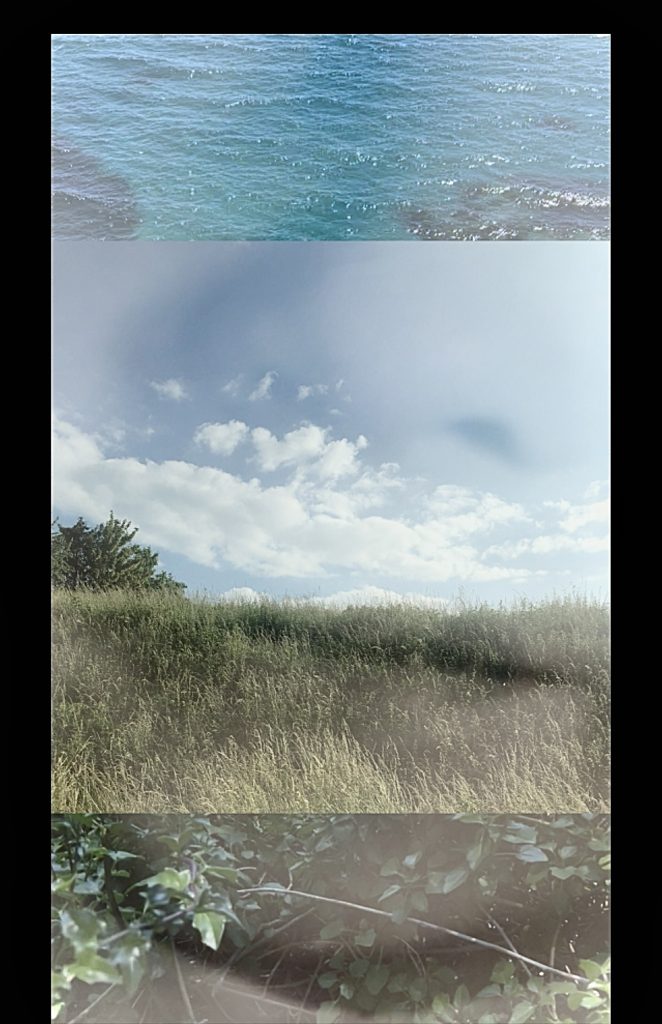
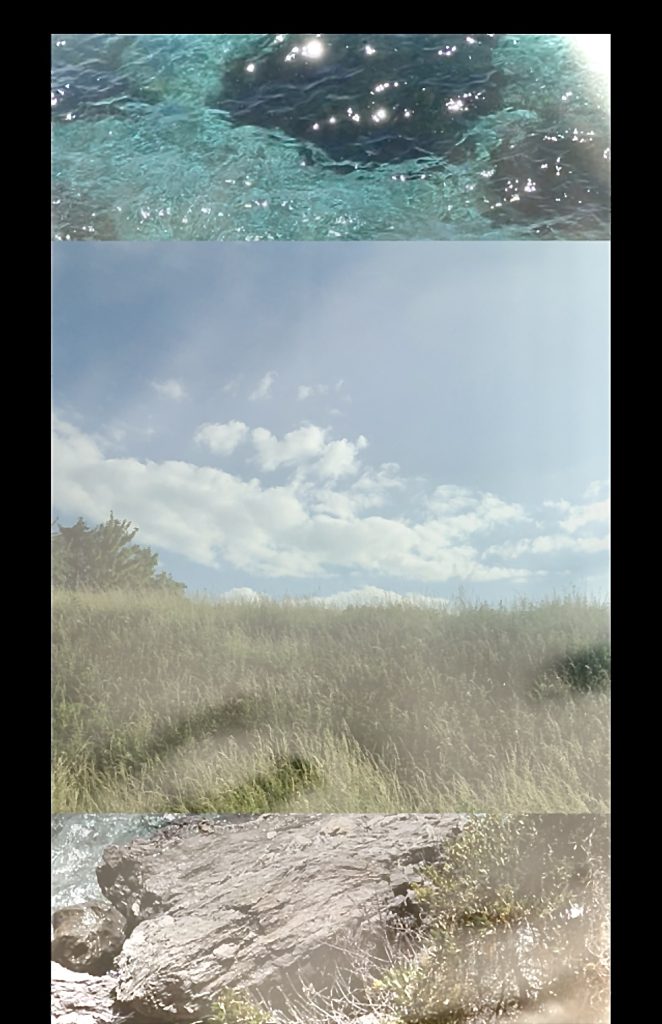
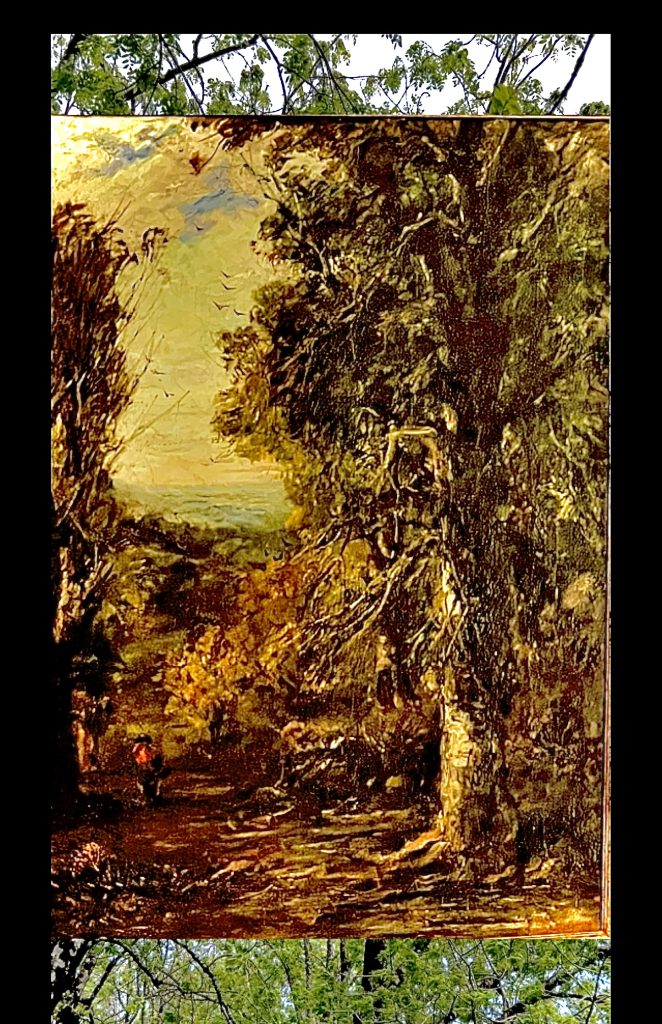
Petites images de paysage avec un arbre, un enfant et l’eau.
Enfant, je rêvais de me perdre. Puis, soudain, dans la brièveté de l’instant, le vent se leva au sein d’un ciel serein, le transformant en une atmosphère imprévue, faisant s’animer un grand arbre singulier.
Aujourd’hui, je vois encore la confiance de cet enfant que j’étais et le peu de traces qu’il souhaitait laisser, en dehors du simple plaisir de se laisser regarder.
A vous de trouver : faites tenir en bon ordre les ingrédients susdits sur l’image en question.
Notes 2025
Enfant
Le substantif épicène enfant est un emprunt au latin classique infans (« [celui] qui ne parle pas [encore].
Arbre
Le terme vient du latin arbor, tout comme ses équivalents dans la plupart des langues romanes: on l’écrit albero en italien, arvore en portugais, ou bien encore arbol en espagnol. La plante, qui a une longue durée de vie, est caractérisée par sa grande hauteur, que son tronc rigide et résistant lui permet d’atteindre.
La Tempête de Giorgione

Small landscape images with a tree, a child, and water.
As a child, I dreamed of losing myself. Then, suddenly, in the brevity of a moment, the wind rose in a serene sky, transforming it into an unexpected atmosphere, bringing a large, singular tree to life. Today, I still see the confidence of that child in me and the few traces he wanted to leave, beyond the simple pleasure of being looked at. It’s up to you to find out: arrange the above ingredients in the correct order on the image in question.
Notes 2025
Child
The epicene noun child is borrowed from Classical Latin infans (« one who does not yet speak »).
Tree
The term comes from the Latin arbor, as do its equivalents in most Romance languages: it is written albero in Italian, arvore in Portuguese, or arbol in Spanish. The plant, which has a long lifespan, is characterized by its great height, which its rigid and resistant trunk allows it to reach.
Giorgione’s Tempest
]